Wednesday, December 18, 2013

William Morris Endeavor, Silver Lake Partners Set To Acquire IMG

Agency powerhouse William Morris Endeavor and their private equity partners Silver Lake Partners have reportedly placed the top offer to acquire sports and entertainment talent agency IMG. According to the New York Times, WME had the winning bid, offering $2.3 billion for the agency, winning over two other competitors, ICM, backed by the Carlyle Group and a partnership between CVC Capital and former News Corp. exec Peter Chernin.

image from www.celebrityaccess.comIMG has been looking for a buyer since the 2011 death of Theodore J. Forstmann, founder of the private equity firm Forstmann Little, which acquired IMG in 2004 for $750 million. Forstmann Little announced in August that they were soliciting bids for the agency and said they were expecting to realize about $2.3  billion on the sale.
Other competitors for IMG included WME rivals CAA and their private equity partners TPG, but CAA pulled out of the bidding early, as did a number of private equity investors such as Bain Capital and Kohlberg Kravis Roberts.
An official announcement about the deal is expected on Wednesday. via CelebrityAccess

The Benefits Of Nonprofit Fiscal Sponsorships For Musicians

By Sandy Asirvatham, musician, writer and co-creator of Mobtown Moon, Baltimore’s "wildly eclectic yet consistently compelling" reinterpretation of Pink Floyd’s DARK SIDE OF THE MOON.
As DIY musicians we try to think of ourselves as businesspeople as well as creatives. But with so many people expecting us to provide our services and products for free or cheap, it sometimes feels as if we’re in charity work.

In fact, I used to wonder half-jokingly whether I should establish my own 501(c)(3) nonprofit organization to house my musical activities as a composer/bandleader. After all, couldn’t music performances, especially in noncommercial genres like jazz improvisation, be seen as a form of community service similar to a local theater or small museum?
At the very least, I figured a tax-exempt status would signal that I wasn’t “in it for the money”--just looking for enough income to sustain myself, pay my band fairly, and create meaningful music.
But it turns out that setting up and maintaining an actual nonprofit is complex and expensive. It’s also an awkward fit for an individual artist, since tax-exempt status is granted to a particular mission, not a particular person. For example, if you’re the founder/choreographer of a dance company, but you retire or get fired by your board, the nonprofit designation remains with the company for as long as it continues to operate.
Then I found out about an interesting hybrid concept called “fiscal sponsorship.” A fiscal sponsor is an established nonprofit organization that agrees (by legal contract) to take an individual artist or group of creative collaborators under its wing for a particular project.
With fiscal sponsorship, you remain a separate legal business with complete creative control over your work. And if your project does turn out to be wildly successful, there aren’t any limits to how much revenue you take in. As they say in the charity world: nonprofit is a tax status, not a business strategy!
But meanwhile, you are able to take advantage of some of your fiscal sponsor’s financial features as a tax-exempt organization.
The most important one is this: you can offer fans, supporters, your parents, or your rich bachelor uncle the possibility of making a tax-deductible donation to benefit your project.
People who itemize their federal tax returns are bound to give you a little bit more money, or at least give it more easily, if it creates a charitable-donation deduction for them. In some cases, you may even be able to integrate your fiscal sponsorship with a crowdfunding platform to seamlessly offer that benefit to your fans.
And this is just speculation on my part, but fiscal sponsorship may provide psychological comfort for donors who want some accountability. Their checks or credit card payments go to your fiscal sponsor, which takes a small administrative cut and then releases it to you for legitimate project costs (including paying yourself along the way, of course).
Fiscal sponsorship can also help you qualify for grants from foundations that only give money to registered 501(c)(3) organizations. This is great if you’ve got a community-oriented or mission-driven idea. Grants that came in via our fiscal sponsorship were the only way my co-creator ellen cherry and I were able to get our massive Baltimore-based Pink Floyd tribute, Mobtown Moon, up and running.
For more detailed information, check out this list of nonprofits who run fiscal sponsorship programs. I can also highly recommend our own fiscal sponsor,Fractured Atlas, a nationwide organization that supports artists in a variety of ways.
Now that our project has been funded, recorded, and released, we look forward to figuring out what we can do to make it a genuine music-business success. But we’ll always be thankful for the community and donor support we received to get it going, with the help of our fiscal sponsor.

Monday, August 5, 2013

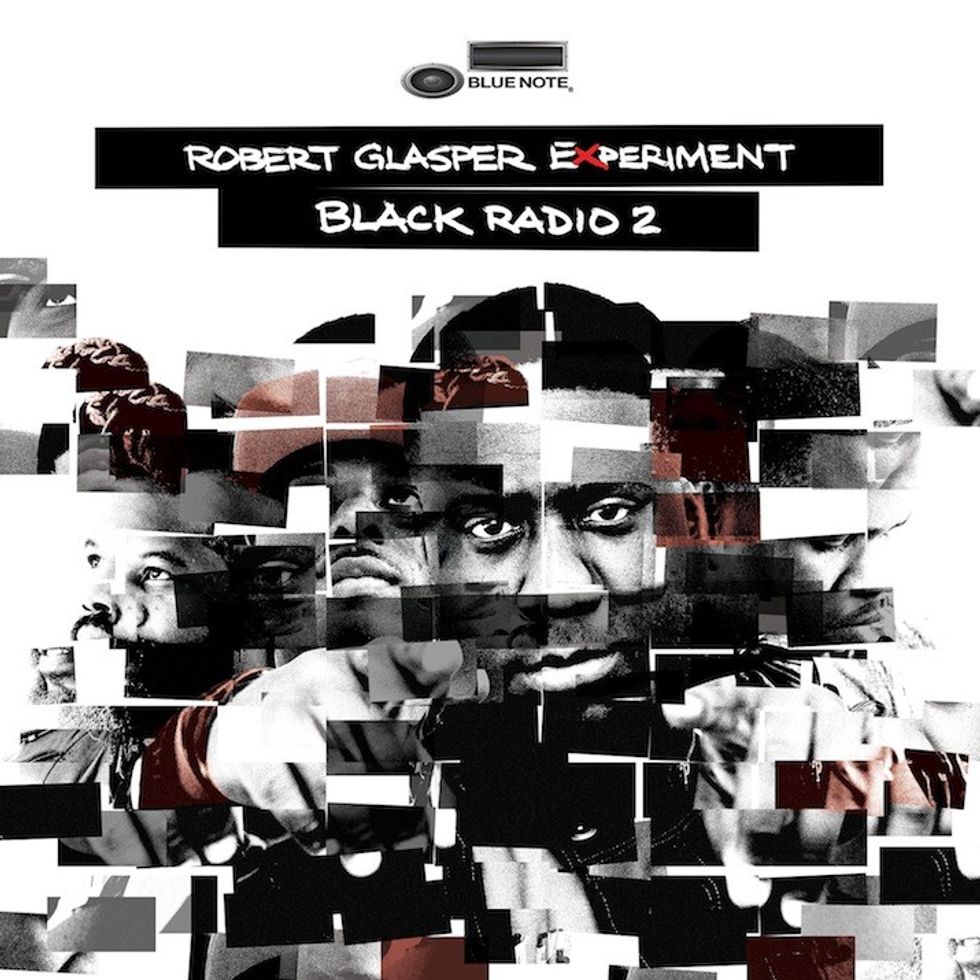
Audio Premiere: Robert Glasper Experiment x Jill Scott “Calls” + New LP ‘Black Radio 2′

Robert Glasper Experiment Black Radio 2
As a Huge Robert Fan/Supporter/Associate and having the pleasure of working with him the last couple years,
I am pleased to see that he has announced the release of his next album and look forward to seeing him in Chicago soon. 
Start spreading the news: the Robert Glasper Experiment is releasing Black Radio 2–the much anticipated follow-up to
 2012′s critically acclaimed Black Radio–on October 29th through Blue Note Records. Today, we have a Okayplayer world 
premiere of the very first leak from the new project: “Calls” featuring Jill Scott. The track shows off RGE’s skill at letting
 a groove sizzle while a vocalist takes center stage–and filling in all of the cracks around them. 
The album features most of the usual suspects, with Derrick Hodge on bass and Casey Benjamin on vocoder and 
saxophone. Drummer Mark Colenburg, (who has toured plenty with the group) has taken over the drum throne.
The record, like the last one, is set to feature a plethora of guests from all musical backgrounds. 
CommonLupe Fiasco, and Snoop Dogg (thought he was lion now?) all represent the hip-hop front while 
Marsha Ambrosius, Anthony HamiltonBrandy, and Lalah Hathaway are stand-outs from soul and r&b backgrounds. 
The pianist’s third album with his ‘Experiment’ band also has collaborations with Fall Out Boy‘s Patrick Stump
Norah Jones, and Emeli Sandé. Unlike the original Black Radio LP, this will feature almost all original compositions. 
With RGE’s ability to blend genres and influences so seamlessly, we’re very excited to hear what they bring to the table. 
Fans can also download the official Robert Glasper Experiment App, which has all of the band’s videos and tour dates.
 Stream the beautiful “Calls”below an scroll down to check out the tracklist.

Black Radio 2 Tracklist:
1.       Baby Tonight (Black Radio Intro)
2.       I Stand Alone featuring Common and Patrick Stump
3.       What Are We Doing featuring Brandy
4.       Calls featuring Jill Scott
5.       No Worries featuring Dwele
6.       Trust featuring Marsha Ambrosius
7.       Yet To Find featuring Anthony Hamilton
8.       You Own Me featuring Faith Evans
9.       Let It Ride featuring Norah Jones
10.   Persevere featuring Snoop Dogg and  Lupe Fiasco
11.   Somebody Else featuring Emeli Sandé
12.   Jesus Children of America featuring Lalah Hathaway and Malcolm-Jamal Warner

Thursday, November 8, 2012

Music: Life After Ipod


Analyst: Post-iPod, the Digital Music Market Is In Serious Trouble...

Wednesday, November 07, 2012
by  paul
Who do we have to thank for our modern, digital music market?  That would be Apple, but more specifically the iPod, according to top industry analyst Mark Mulligan.  And, once sales of iPods started tapering off, so did the explosive growth of the digital assets.     

"As soon as iPod sales slowed, so did the digital music market," Mulligan relayed.  "Prior to 2008 the digital music market had grown by an average annual rate of 85.2%, after 2008 that rate dropped to 7.5%.  In many markets the 2009 slowdown was of falling-off-a-cliff proportions: in the US digital growth slipped from 30% in 2008 to a near flat-lining 1% in 2009."

Which means, we actually have a serious growth problem, right now.  Here's a look at digital music sales alongside iPod sales, using IFPI and Apple-supplied stats (and posted on Mulligan's blog).


Of course, portability has grown vastly more complex in the post-iPod era, though the iPod is still a very functional app in iPhones.  Androids have full-service music functionality as well, but according to Mulligan, it's not the same thing.  And the net result is a non-dynamic, sputtering digital music market, one that really needs another 'iPod moment' more than anything else. "With all of the talk of streaming services and the shift to the consumption era it is easy to think of Apple’s iTunes Store as yesterday's game," Mulligan relayed.  

"Such an assumption is as dangerous as looking upon the CD as an irrelevance in the present era.  The CD and iTunes combined account forapproximately 78% of total recorded music revenue in the world's 10 largest music markets.   And yet neither look like they are going to provide the momentum the music industry needs over the next few years."

Friday, September 21, 2012

Head of CBS: "Paying Artists for Radio Play Is Absurd...

From Digital Music News

A one-word description for the next few years of radio? 

 
Chaos!
 
Thursday morning: Big Machine Label Group inks another momentous, direct licensing deal with Entercom Communications Corp., one that covers both terrestrial (analog) and digital (online, mobile) radio streams.  Just like the groundbreaking Clear Channel partnership inked in June, this means royalties will be directly paid to Big Machine, all through privately-negotiated terms.  This is a deal done in their treehouse, and not subject to statutory, government-mandated rates. 
 
All of which represents a massive, disruptive threat to SoundExchange, a bureaucracy currently bogged in bad accounting, unpaid holding balances, and a legal battle with one of its top contributors.  Meanwhile, Pandora is choking to death, perhaps a commentary on the broader prospects for digital radio formats.  "When our interests are aligned, and when we have a very predictable, transparent business model, we are much more motivated to grow the digital business," Clear Channel CEO John Hogan recently told an audience at the Billboard Country Summit in Nashville.  
 
These aren't handshakes happening in some corner.  Instead, these are some of the largest music media companies on the planet.  Big Machine is home to mega-artists like Taylor Swift and Tim McGraw; Entercom is one of the largest conglomerates in the United States with 100+ stations across 23 markets, including Boston, San Francisco, Seattle, Denver and Portland.  Which means, of course, Big Machine gets lots of airplay on those 100+ stations, not to mention the Clear Channel stations.
 
"The idea that we have to pay them to put their music on our radio stations is absurd..."
 
But wait: not every big dog wants to play catch.  That includes CBS chief executive Leslie Moonves, who considers rotation on radio a privilege, not a right.  And definitely not something he's willing to pay for.  "The idea that we have to pay them to put their music on our radio stations is absurd," Moonves recently told a group of radio executives at a National Association of Broadcasters conference in Dallas, as quoted by RadioInfo. 
 
Which means, in 2012, the radio terrain looks something like this:
 
(1) Some mega-broadcasters, like CBS Radio, will fight tooth-and-nail against any attempt to charge royalties on recordings.  
 
(2) Others, like Clear Channel and Entercom, will entertain directly-licensed deals.  But these deals could take considerable time to complete and could exclude vast numbers of artists in the process (remember, Big Machine gets lots of preferential rotation treatment here).  
 
(3) These deals could also severely marginalize companies like SoundExchange. 
 
(4) The major labels will continue to fight in Congress for a federally-mandated royalty on radio-streamed recordings.  They will probably fail.
 
(5) Companies like Pandora will continue to pay royalties that broadcast radio does not.  And, struggle for survival in the process.
 
(6) Satellite (ie, Sirius XM) radio will continue to pursue directly-licensed arrangements, while litigating against the likes of SoundExchange and A2IM.
 
(7) And, broadcast radio will still be playing the same, 40 songs you know and love...
 

Thursday, September 20, 2012

my top ten list of why relationships fail


#10 women can never let little things go

#9 men are not that sensitive to women

#8 someone is always more controlling than the other

#7 someone always has there eye out for something better.. male and female... everybody wanna upgrade.. eff beyonce be content sometimes with what you have. the grass aint always greener.
 
#6 unable to accept people for who they are without trying to change them. this is it people.. we can try but we r who we r and that's it

#5 people have low self esteem and expectations about themselves and and eff shit up...!!!

#4 to damn selfish

#3 listening to everyone around you and not your damn self... take time to recognize what you want, who you are and then try to find some1.

#2 unreasonable expectations about how relationships should work. your knight might not be in a knights uniform. be open 4 love in all forms

#1 no one wants to effing LISTEN and COMMUNICATE effectively. an open dialogue with each other. don't talk at them or to them. talk with them


52 Ways to Screw an Artist, by Warner Bros. Records...

POST FROM DIGITAL MUSIC NEWS

Wednesday, September 19, 2012
by  paul
Sadly, this is a story that dates back to 1969, when a young James Taylor signed a deal with Warner Bros. Records. That was the beginning of a breakout career that included numerous hit songs and tens of millions of album sales.  But it also marked the beginning of a duplicitous financial relationship, one that seemed designed to systematically cheat this artist over a period of several decades.
This week, Taylor and his attorneys decided to file suit against Warner Bros., in part to capture higher royalties from digital downloads.  Taylor, like many other legacy artists, wants to treat downloads like licenses instead of sales, and receive drastically higher payouts in the process.  But the paperwork is also airing lots of old, dirty laundry.
According to the allegations in the filing, these are the various ways in which Warner Bros. Records has screwed James Taylor.  Keep in mind: this list of grievances only dates back to 2004...

(2) The various parties sifted through the audit, and ultimately compromised on an amount totaling $764,056 (some of the topline amount appears to include recategorizations of digital sales as licenses, which would result in higher payments).

(3) Warner Bros. subsequently paid only $97,857 of that balance.

(4) Several days ago (September 13th), Warner decided to dispute the remaining $666,199.  Of that, the label claimed to owe just $147,278.

(5) Of the $147,278, Warner has paid $0 so far, meaning less than $100,000 of the $764,056 agreed upon amount has been paid.

(6) During the audit, Taylor's accounting firm found that Warner Music had grossly exceeded the number of 'non-royalty bearing' units in the amount of $47,869.  This probably refers to free and promotional copies, or phantom units designed to protect Warner Music from paying actual royalties.

(7) Also during the audit, Taylor found that Warner Bros. had misallocated customer returns into various royalty and non-royalty bearing buckets.  The result was an $800 shortfall.

(8) On the release Mudslide Slim, Warner Music applied a royalty rate of 10% and 11%, instead of the 11.5% agreed upon rate.  The shortfall was $869.

(9)  Warner Bros. Records sold the cassette version of Taylor's Greatest Hits at an unauthorized budget price.  Damages for that action were not specified.

(10) Warner underreported sales of Taylor's Walking Man CD by 50%, resulting is a royalty shortfall of $7,142.

(11) The audit also found that Warner Bros. did not pay Taylor for 'excess free goods' associated with the BMG and Columbia House record clubs.  The shortfall?  $43,420.

(12) Warner Bros. also failed to report sales on certain compilation albums that featured Taylor's music, for a shortfall of $10,259.

(13) Warner also improperly applied a 25% 'midline reduction' on foreign sales of James Taylor's Greatest Hits, for a shortfall of $18,747.

(14) The audit also revealed that Warner Bros. applied 'insufficient uplift percentages' on foreign sales, resulting in a shortfall of $3,641.

(15) Warner was also found to have paid insufficient mechanical royalties across various albums, for a shortfall of $928.

(16) The audit also found 'miscellaneous' unpaid royalties beyond these listed amounts, totalling $13,603.

(17) In a dispute over the inclusion of Taylor's music in a compilation called Hits of the 60s and 70s, produced by Madacy Entertainment, Warner Music claimed that this was a 'manufacturing/custom product deal' subject to a 2-cent per unit royalty rate.  However, the deal with Madacy states that this was a licensing deal, meaning Taylor should have received a 50% share, totalling $1,893.  
Warner subsequently agreed to liabilities of $388, of which it has not paid.

(18) The audit also found that Warner Bros. Records had used Taylor's songs in various compilations without permission, against the contract terms.  That would entitle Taylor to 100% of royalties, an amount totaling $84,225.

(19) Warner Bros. also decided to pay nothing on foreign performances of Taylor's work, while claiming that its agreements did not cover performances.  The agreement between the parties calls for payments on all licensing deals, for a total of $4,603.

(20) The audit also found that Warner Bros. charged James Taylor for taxes on its profits, but failed to compensate Taylor for various tax credits.  That created a shortfall of $518.

(21) When Warner Bros. decided to reissue two remastered Taylor albums on vinyl, the label charged the manufacturing costs as 'recording costs' against Taylor's royalties.  The shorted royalties totaled $3,724.

(22) Warner has taken 'packaging' and 'free goods' deductions from various download, ringtone, and other digital sales, despite the complete absence of either on digital formats.

(23) Outside of the license vs. sale question, Warner was also found to be paying royalties on the wholesale price offered to companies like Apple, not the Suggested List Retail Price (SLRP) as designated in the contract.  The difference amounts to $38,310.

(24) Warner refused to disclose any sales data from its over-the-air download partnership with Sprint.  That forced Taylor's accountants to forge an estimate of amounts not paid, which reached a minimum of $32,378.  Warner has limited its liability to $3,251.

(25) Taylor further claims lost interest on these royalties in the amount of $153,884.

(26) During the audit, Warner Bros. did not supply information related to the following:
(a) Columbia House record club receipts;
(b) complete digital sales reports;
(c) foreign performance income;
(d) foreign receipts of any kind;
(e) any streaming or internet radio statements;
(f) any details on how foreign royalties were calculated;
(g) a list of licensees using Taylor's music;
(h) details related to the use of Taylor masters on compilation albums;
(i) details on royalty reductions from Rhino releases;
(j) any information (or payment) related to settlements with Napster, Kazaa, or any other litigated-against company.


(28) Warner has not responded to the second audit, though the disputed amount totals $1,048,075 (some of the topline amount appears to include recategorizations of digital sales as licenses, which would result in higher payments).
Beyond the sale vs. licensing complaint, the other concerns from the second audit include:

(29) On the physical side, the auditing team found additional royalty discrepancies totaling $2,382.

(30) The second audit also found that Warner Music exceeded its 20 percent allowance of 'free goods,' which increased the amount of non-royalty units and violated the agreement.  The damages assessed from this totaled $56,162.

(31) The auditors also found a 'suspense account' at Warner Music that held an unspecified amount of Taylor's royalties.  Warner denied such an account existed, and therefore declined to offer any details on which products or payments were included in this alleged account.  

(32) Despite an agreement to change the percentage after the first audit, Warner Bros. continued to pay an 11 percent royalty on Taylor's album, Mudslide Slim.  The agreed-upon royalty amount was 11.5 percent, resulting in underpayments of $776.

(33) The second audit also revealed that Warner had deducted an excessive royalty amount for one of the producers on the album, Gorilla.  The producer was paid 2 percent, instead of the agreed-upon 1.5 percent rate, resulting in damages of $742.

(34) Warner continued to sell the cassette version of Taylor's Greatest Hits at an unauthorized budget price, despite agreeing not to do this during the first audit.

(35) Additionally, Warner continued to underpay royalties on certain albums by 50 percent, particularly those being removed from the catalog listing.  This was in violation of the contracts, and happened despite agreements obtained during the first audit.  Underpayments were found to total $2,257.

(36) The second audit also found that Warner was still not paying anything on record club sales, particularly for the albums Greatest Hits and Best of James Taylor.  This was also despite an expressed agreement during the first audit; damages totalled $4,127.

(37) Furthermore, Warner Music continued to withhold royalties on 'excess free goods' tied to record clubs, including those associated with Rhino Records.  This was despite earlier agreements during the first audit, with damages totalling $20,090.

(38) The auditors also found that Taylor was not paid at all on various master synchronization uses, for several shows.  The unpaid royalties totalled $35,861.

(39) The auditors continued to find Taylor's songs included in a number of compilation releases, without any permission whatsoever. Furthermore, there were no royalties paid on these releases, nor any explanations offered.  Total underpayments are estimated at $10,608.

(40) Additionally, Warner did not properly passthrough royalties from SoundExchange, particularly for 'Ephemeral or Business Services.'  Unpaid: $217.

(41) James Taylor was paid a piece of the Napster and Kazaa settlements, but not enough.  The audit found that Warner collectively underpaid on both settlements by $42,460.

(42) During the second audit period, Warner was also found to be receiving foreign performance income on Taylor's works, but did not pass any of this income through to the artist.  Receipts or documentation was not supplied by Warner, though damages were estimated at $12,903.

(43) Also on foreign royalties, during the second period, Warner was also found to be using 'insufficient uplift percentages,' resulting in damages of $1,567

(44) Similar to the first period, Warner was found to be deducting taxes against Taylor's royalty statement, but not applying tax credits received.  Damages: $5,251.

(45) Also during the second period, Warner was found to be further underpaying on mechanical royalties, with amounts squirreled into a mysteriod 'suspense account'.  Estimated damages: $2,242.  

(46) During the period, Warner Music was found to have undercounted sales of James Taylor's Greatest Hits by 20,525 units.  That resulted in reduced mechanical royalties of $5,603.

(47) The accounting firm also uncovered reduced mechanical royalties on a number of albums and releases, totalling $3,034.

(48) On top of all that, Warner was found to be applying an additional, 85 percent reduction on mechanical royalties owed, resulting in additional damages of $80,209.

(49) The second audit further revealed that Warner Music was systematically underpaying on iTunes sales, specifically by applying royalties to wholesale prices, instead of Suggested List Retail Prices (SLRP).  The resulting, unpaid amounts were $106,437.

(50) The auditing team also found serious underreporting on digital sales, specifically by comparing Taylor's royalty statements with Warner's broader sales reports.  Underpayments associated with this underreporting totalled $36,689.

(51) Taylor further claims that these non-payments during the period resulted in missed interest income of $54,647.

(52) During the second auditing period, Warner Bros. also failed to provide the following documents.
(a) pricing surveys or any information used in the calculation of foreign royalties.
(b) domestic and foreign 'suspense lists' on physical sales.
(c) a detailed list of authorized retailing endpoints (digital or physical). Or, any agreements with these retailers.
(d) any statements related to income received from YouTube or Rhino.tv.
(e) any information related to master uses on compilation albums (agreements, percentages, etc.)